
May 21, 2026
May 21, 2026
Why Your Website Is Losing You More Customers Than It's Winning
The average website converts 2.35% of visitors. That means 97 out of every 100 people who land on your site leave without taking action. For a service business spending on SEO, ads, and social to drive traffic — that 97% is not a bounce rate. It is a revenue leak. Here is what is causing it and how AI closes it.
The average website converts 2.35% of visitors. That means 97 out of every 100 people who land on your site leave without taking action. For a service business spending on SEO, ads, and social to drive traffic — that 97% is not a bounce rate. It is a revenue leak. Here is what is causing it and how AI closes it.
You paid to build the website. You pay monthly for hosting. You invest in SEO or ads to drive traffic to it. And then 97 out of every 100 people who arrive read a few lines, look at your phone number, and leave. They did not dislike you. They had a question that did not get answered. They wanted a price and got a contact form. They came at 10pm and found a business that was closed. Your website is not a marketing asset. It is a waiting room with nobody in it.
Why Your Website Is Losing You More Customers Than It's Winning
You paid to build the website. You pay monthly for hosting and maintenance. You invest in SEO, ads, or social media to drive traffic to it.
And then 97 out of every 100 people who land on it leave without taking any action.
They did not dislike you. They were not uninterested. They had a question that did not get answered. They wanted a rough price and found a form that promised someone would call them back tomorrow. They came at 10:30pm on a Thursday, ready to book, and found a business that was effectively closed.
The global average website conversion rate in 2026 is 2.35% — across 46 billion web sessions (Contentsquare Digital Experience Benchmark Report). That means 97.65 out of every 100 visitors leave without converting. For service businesses specifically — HVAC companies, cleaning businesses, legal firms, medical practices — the contact form submission rate is typically 1–3% of visitors.
The other 97–99% are not lost because your service is wrong or your pricing is too high. They are lost because the gap between "interested visitor" and "confirmed booking" was too wide to cross without help. And your website — a static brochure with a phone number and a contact form — is not designed to close that gap.
This is fixable. The businesses that fix it do not spend more on traffic. They convert more of the traffic they already have.
The Uncomfortable Maths Behind Your Current Website
Before the solutions, the numbers — because most service business owners have never seen this calculation applied to their own site.
Scenario: A cleaning business
Monthly website visitors: 600
Current conversion rate (contact form): 2%
Monthly leads from website: 12
Average job value: £180
Monthly revenue from website: £2,160
Those 12 leads cost you everything you spend on SEO, ads, and content to generate. The other 588 visitors — who found your website, showed enough interest to spend time on it, and then left — generated nothing.
What a 5% conversion rate (achievable with an AI chatbot) looks like:
Monthly leads from website: 30
Monthly revenue from website: £5,400
Monthly uplift: £3,240
Annual uplift: £38,880
From the same traffic. The same SEO spend. The same ads budget. The same website address. Just a higher conversion rate — achieved by removing the friction that is currently sending 97% of visitors away empty-handed.
The top 10% of service business websites convert at 11.45% (Contentsquare, 2026). The gap between a 2.35% average and an 11.45% top-performer is not explained by better design, better copy, or better photography. It is explained by one thing: top-converting service business websites engage visitors in real time and give them what they came for — an answer, a quote, a booking — before they close the tab.
The Five Reasons Your Website Converts at 1–3%
Each of these problems is specific, diagnosable, and fixable. Most service business websites have at least three of them.
Problem 1: The Contact Form Is a Conversion Killer
The standard service business website contact form asks for a name, email, phone number, and a free-text message — then thanks the visitor for their enquiry and promises to be in touch.
What the visitor actually experiences: uncertainty about when someone will call, reluctance to provide their phone number before they know anything about pricing, and the realisation that the decision they were ready to make today will not happen until tomorrow at the earliest.
44% of B2B buyers will leave a website when they find no immediate response capability (Marketing LTB). The contact form is perceived as a barrier, not a bridge. It converts visitors who are highly motivated and have no alternative — not visitors who are comparing you against three other businesses in the same Google search.
The AI chatbot replaces this dynamic entirely. The visitor types a question. They get an answer within seconds — a specific answer, about your specific services, in your specific service area, at your specific pricing. The friction of "fill this form and wait" becomes the momentum of "I just got what I needed and I'm booking now."
Problem 2: Pricing Ambiguity Kills Intent
The single most common question on a service business website is some variation of "how much does this cost?" The most common answer is "contact us for a quote."
This is understandable — jobs vary, surveys are needed, pricing is contextual. But from the visitor's perspective, "contact us for a quote" is a dead end. They came to the website to help them decide. The website told them it cannot help them decide. They close the tab and try the next result.
An AI Quote Estimator Widget changes this fundamentally. The visitor is walked through a structured conversation — what service do you need, what is the property size, what is your location, what is your timeframe. Based on their inputs, the widget returns a range: "Based on what you've told us, a job like yours typically runs between £X and £Y. To give you an accurate quote, we'd schedule a free assessment — can I book that for you?"
The visitor got a number. Not a firm price — an estimate — but enough to calibrate their expectations. And the path from estimate to booked assessment is a single click, completed before they leave the page.
Businesses using AI quote estimators report conversion rates of 5–10% on quote pages versus 1–2% for static "contact us for a quote" approaches. The estimator is not replacing the survey — it is converting the visitor from browser to booked assessment so the survey can happen.
Problem 3: After-Hours Visitors Get Nothing
35–40% of service business website visits occur outside standard business hours — evenings, weekends, bank holidays (industry data, 2026). These are disproportionately high-intent visits: the homeowner who has been thinking about the problem all week and finally sits down to look into it on a Sunday afternoon.
A static website at 9pm is identical to a closed office. There is no response capability, no booking option, no immediate value. The visitor browses, decides they cannot do anything right now, and mentally files you under "maybe follow up later" — which in most cases never happens.
An AI chatbot operates identically at 9pm on a Sunday as at 11am on a Wednesday. The visitor who browses after hours gets the same immediate, specific, responsive experience as one who visits during business hours. They get a quote estimate. They get an availability check. They get a confirmed booking — before they close the laptop.
Traffic from AI referral sources (ChatGPT, Perplexity) converts at 3.49% versus 2.86% from traditional organic search (Digital Applied, 2026) — a 22% conversion uplift. This audience, increasingly common in 2026, is arriving with higher intent because AI search has already narrowed their options. A website that engages them immediately with a chatbot captures this high-intent traffic at a disproportionately high conversion rate.
Problem 4: Mobile Visitors Are Being Lost at Scale
Mobile devices account for 65% of all website traffic but convert at 1.82% — versus desktop's 3.14% (Contentsquare, 2026). A 42% conversion gap between mobile and desktop, on the majority of your traffic.
The gap exists not because mobile visitors are less interested but because mobile website experiences create more friction: forms are harder to fill on small screens, click-to-call buttons are hit or miss, and multi-step booking processes are abandoned at higher rates on mobile.
An AI chatbot on mobile changes the interaction model entirely. Instead of asking a visitor to fill in a form with their thumbs, the chatbot conducts a natural conversation — short questions, tap-to-answer options, guided flow. The booking happens within the chat interface rather than through a separate form. The friction of mobile form submission is replaced by the lower-friction experience of a conversation.
Service businesses that deploy a well-configured mobile-optimised chatbot close a significant portion of the mobile conversion gap — bringing mobile conversion rates closer to the desktop benchmark rather than accepting the 42% differential as inevitable.
Problem 5: The Page Speed Tax
A 1-second delay in page load time causes a 7% drop in conversions (Marketing LTB, 2026). Google's Core Web Vitals data shows that sites meeting all three performance thresholds see roughly 24% lower abandonment than sites that do not.
For service business websites — often built on page builders with large image files, unoptimised scripts, and third-party embeds — page speed is a silent conversion tax that few owners are aware of. A site loading in 4 seconds versus 2 seconds loses a measurable percentage of visitors before they even see the content.
The My Revue website build uses Framer CMS — a performance-optimised platform that consistently meets Core Web Vitals thresholds. Pages load fast on mobile. Images are optimised automatically. No page builder bloat. The conversion rate benefit is structural, not dependent on ongoing maintenance.
The AI Layer That Closes the Conversion Gap
A well-designed website with fast load times, clear messaging, and a strong call to action will convert at 2–4% under normal conditions. The businesses converting at 8–11% have added an AI layer — a system that engages visitors in real time, answers their specific questions, provides instant quote estimates, and guides them to a confirmed booking without human involvement.
My Revue's AI Chatbot and Quote Estimator Widget does this specifically for service businesses.
What it does:
Real-time conversation from first visit. The chatbot activates after a configurable trigger — time on page, scroll depth, or immediately on certain high-intent pages (services page, pricing page). No intrusive pop-up. A subtle, brand-matched widget that opens when the visitor signals intent.
Specific FAQ handling. Trained on your services, your service area, your pricing structure, your booking process. Not generic chatbot responses. Your answers, in your tone, to the questions your customers actually ask. Service area: yes, we cover it or no, we do not. Pricing: here is the range for that job type. Availability: here are the next available slots.
AI Quote Estimator. For service businesses where pricing depends on job specifics, the estimator walks the visitor through a structured qualification conversation and returns a range based on their inputs. The visitor gets a number — enough to decide whether to proceed — and is guided to book an assessment as the next step.
Calendar booking integration. Direct connection to your GoHighLevel calendar, Google Calendar, or Outlook. The chatbot books appointments within the conversation — live availability checks, slot confirmation, SMS confirmation sent. A visitor who arrives at 10:30pm books their Thursday morning assessment before they close the tab.
Lead capture for non-bookers. Visitors who engage but do not book immediately have their name, number, and enquiry type captured and synced to your CRM. They enter the automated lead follow-up sequence — five touches over 14 days, starting within 2 minutes of their visit.
Price: £250 one-off. No ongoing subscription. No monthly licence. Configured once, runs permanently. The one-time investment is recovered the first week a chatbot converts a single job that a contact form would have lost.
The Conversion Rate Stack: Building to 8–10%
A chatbot alone gets you from 2% to 5–6%. The businesses hitting 8–10% have built a full conversion stack.
Foundation: Fast, clear website (2–3% baseline)
Core Web Vitals passing on mobile and desktop
Clear service pages with specific, outcome-focused copy
Trust signals visible without scrolling (reviews count, years in business, accreditations)
Phone number in the header, click-to-call on mobile
Layer 1: AI chatbot and quote estimator (+2–4%)
Instant response to visitor questions 24/7
Quote estimation that converts price-curious visitors to booked assessments
Calendar booking within the chat interface
Mobile-optimised conversation flow
Layer 2: Social proof density (+1–2%)
Google review count and star rating visible on the homepage and service pages
Recent reviews displayed dynamically (not a static screenshot from 2023)
Case study or before/after content for high-value services
Trust badges relevant to your vertical (Gas Safe, accreditations, insurance)
Layer 3: GEO-optimised FAQ content (+0.5–1%)
Structured FAQ sections on service pages with direct question-and-answer format
Location-specific pages for each service area
Schema markup that feeds Google's AI Overviews and AI search citations
Traffic from ChatGPT and Perplexity arriving with 22% higher conversion intent
The cumulative effect of all four layers is a website that converts 8–11% of visitors — four to five times the industry average — from the same traffic volume you are already generating.
Frequently Asked Questions
How do I know what conversion rate my website currently has?
Install Google Analytics 4 (free) and configure a conversion event for form submissions and phone number clicks. The conversion rate report will show you the percentage of sessions that result in a conversion event. If you do not have GA4 configured, My Revue's website audit will benchmark your current conversion performance against industry standards as part of the free audit.
Will the chatbot fit my website's design?
Yes. My Revue's AI chatbot widget is fully customised to your brand — your colours, your logo, your greeting message, your tone. It is embedded via a lightweight script tag and renders on any website platform (Framer, WordPress, Wix, Squarespace, GHL). The widget does not interfere with existing page design and is optimised for both desktop and mobile display.
Does the chatbot replace my contact form?
No — the chatbot runs alongside your existing contact form. Many visitors prefer different interaction modes. The chatbot captures visitors who want an immediate conversation. The contact form captures visitors who prefer to compose a detailed message. Running both in parallel covers the full range of visitor preferences and consistently outperforms either alone.
What if a visitor asks something the chatbot cannot answer?
The chatbot is configured with clear fallback logic. If a question falls outside the knowledge base, it acknowledges the limitation professionally and offers to connect the visitor with your team — providing your phone number, email, or a booking link for a callback. No visitor hits a dead end. The escalation is smooth and on-brand.
Can the quote estimator give accurate prices if jobs vary significantly?
The estimator is designed to give ranges, not fixed quotes — framing them explicitly as estimates based on typical jobs of that type and scale. The range is calibrated to your actual pricing. Visitors understand they are getting a ballpark figure; the goal is to convert them from "undecided browser" to "booked assessment" where an accurate quote can be provided. This framing is honest, effective, and consistently outperforms "contact us for a quote" at every conversion metric.
Conclusion
Your website is probably doing less work than you think.
97 visitors out of every 100 leave without converting. The contact form converts the most motivated visitors — the ones who would have found a way to book regardless. The other 97% leave because a question went unanswered, a price was unavailable, the time was wrong, or the friction was too high.
An AI chatbot and quote estimator closes each of those gaps. Specific answers, instant. Estimate ranges, immediate. After-hours booking, available. Mobile friction, eliminated. The conversion rate moves from 2% toward 5–10% — from the same traffic, the same SEO investment, the same ad budget.
My Revue builds and deploys the AI chatbot and quote estimator for service businesses across the UK, USA, and Australia. One-off investment of £250. Configured specifically for your services and your pricing. Live within 7–10 days.
[Book a free website conversion audit] — we will review your current site, calculate your estimated miss rate against industry benchmarks, and show you exactly what the chatbot and quote estimator would deliver for your specific traffic volume and average job value.
[Book My Free Audit]

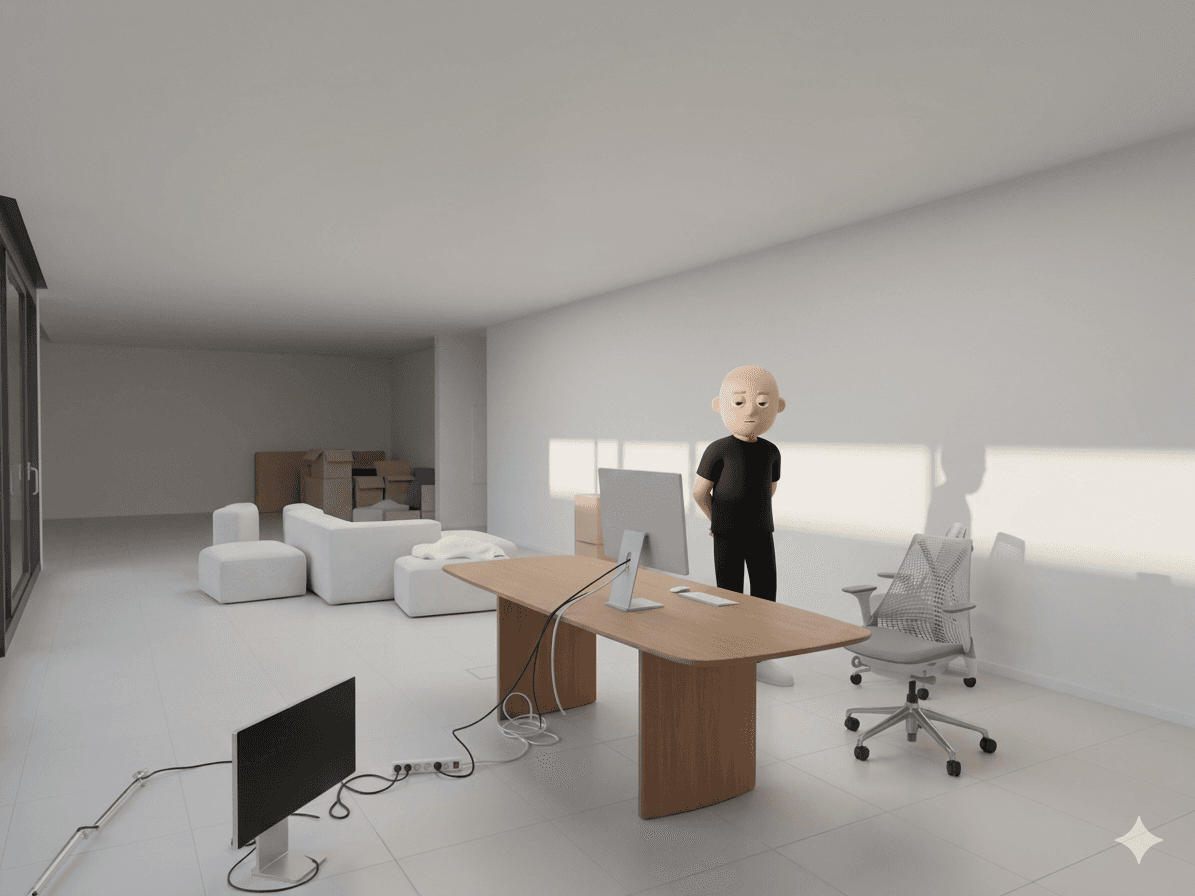


You paid to build the website. You pay monthly for hosting. You invest in SEO or ads to drive traffic to it. And then 97 out of every 100 people who arrive read a few lines, look at your phone number, and leave. They did not dislike you. They had a question that did not get answered. They wanted a price and got a contact form. They came at 10pm and found a business that was closed. Your website is not a marketing asset. It is a waiting room with nobody in it.
Why Your Website Is Losing You More Customers Than It's Winning
You paid to build the website. You pay monthly for hosting and maintenance. You invest in SEO, ads, or social media to drive traffic to it.
And then 97 out of every 100 people who land on it leave without taking any action.
They did not dislike you. They were not uninterested. They had a question that did not get answered. They wanted a rough price and found a form that promised someone would call them back tomorrow. They came at 10:30pm on a Thursday, ready to book, and found a business that was effectively closed.
The global average website conversion rate in 2026 is 2.35% — across 46 billion web sessions (Contentsquare Digital Experience Benchmark Report). That means 97.65 out of every 100 visitors leave without converting. For service businesses specifically — HVAC companies, cleaning businesses, legal firms, medical practices — the contact form submission rate is typically 1–3% of visitors.
The other 97–99% are not lost because your service is wrong or your pricing is too high. They are lost because the gap between "interested visitor" and "confirmed booking" was too wide to cross without help. And your website — a static brochure with a phone number and a contact form — is not designed to close that gap.
This is fixable. The businesses that fix it do not spend more on traffic. They convert more of the traffic they already have.
The Uncomfortable Maths Behind Your Current Website
Before the solutions, the numbers — because most service business owners have never seen this calculation applied to their own site.
Scenario: A cleaning business
Monthly website visitors: 600
Current conversion rate (contact form): 2%
Monthly leads from website: 12
Average job value: £180
Monthly revenue from website: £2,160
Those 12 leads cost you everything you spend on SEO, ads, and content to generate. The other 588 visitors — who found your website, showed enough interest to spend time on it, and then left — generated nothing.
What a 5% conversion rate (achievable with an AI chatbot) looks like:
Monthly leads from website: 30
Monthly revenue from website: £5,400
Monthly uplift: £3,240
Annual uplift: £38,880
From the same traffic. The same SEO spend. The same ads budget. The same website address. Just a higher conversion rate — achieved by removing the friction that is currently sending 97% of visitors away empty-handed.
The top 10% of service business websites convert at 11.45% (Contentsquare, 2026). The gap between a 2.35% average and an 11.45% top-performer is not explained by better design, better copy, or better photography. It is explained by one thing: top-converting service business websites engage visitors in real time and give them what they came for — an answer, a quote, a booking — before they close the tab.
The Five Reasons Your Website Converts at 1–3%
Each of these problems is specific, diagnosable, and fixable. Most service business websites have at least three of them.
Problem 1: The Contact Form Is a Conversion Killer
The standard service business website contact form asks for a name, email, phone number, and a free-text message — then thanks the visitor for their enquiry and promises to be in touch.
What the visitor actually experiences: uncertainty about when someone will call, reluctance to provide their phone number before they know anything about pricing, and the realisation that the decision they were ready to make today will not happen until tomorrow at the earliest.
44% of B2B buyers will leave a website when they find no immediate response capability (Marketing LTB). The contact form is perceived as a barrier, not a bridge. It converts visitors who are highly motivated and have no alternative — not visitors who are comparing you against three other businesses in the same Google search.
The AI chatbot replaces this dynamic entirely. The visitor types a question. They get an answer within seconds — a specific answer, about your specific services, in your specific service area, at your specific pricing. The friction of "fill this form and wait" becomes the momentum of "I just got what I needed and I'm booking now."
Problem 2: Pricing Ambiguity Kills Intent
The single most common question on a service business website is some variation of "how much does this cost?" The most common answer is "contact us for a quote."
This is understandable — jobs vary, surveys are needed, pricing is contextual. But from the visitor's perspective, "contact us for a quote" is a dead end. They came to the website to help them decide. The website told them it cannot help them decide. They close the tab and try the next result.
An AI Quote Estimator Widget changes this fundamentally. The visitor is walked through a structured conversation — what service do you need, what is the property size, what is your location, what is your timeframe. Based on their inputs, the widget returns a range: "Based on what you've told us, a job like yours typically runs between £X and £Y. To give you an accurate quote, we'd schedule a free assessment — can I book that for you?"
The visitor got a number. Not a firm price — an estimate — but enough to calibrate their expectations. And the path from estimate to booked assessment is a single click, completed before they leave the page.
Businesses using AI quote estimators report conversion rates of 5–10% on quote pages versus 1–2% for static "contact us for a quote" approaches. The estimator is not replacing the survey — it is converting the visitor from browser to booked assessment so the survey can happen.
Problem 3: After-Hours Visitors Get Nothing
35–40% of service business website visits occur outside standard business hours — evenings, weekends, bank holidays (industry data, 2026). These are disproportionately high-intent visits: the homeowner who has been thinking about the problem all week and finally sits down to look into it on a Sunday afternoon.
A static website at 9pm is identical to a closed office. There is no response capability, no booking option, no immediate value. The visitor browses, decides they cannot do anything right now, and mentally files you under "maybe follow up later" — which in most cases never happens.
An AI chatbot operates identically at 9pm on a Sunday as at 11am on a Wednesday. The visitor who browses after hours gets the same immediate, specific, responsive experience as one who visits during business hours. They get a quote estimate. They get an availability check. They get a confirmed booking — before they close the laptop.
Traffic from AI referral sources (ChatGPT, Perplexity) converts at 3.49% versus 2.86% from traditional organic search (Digital Applied, 2026) — a 22% conversion uplift. This audience, increasingly common in 2026, is arriving with higher intent because AI search has already narrowed their options. A website that engages them immediately with a chatbot captures this high-intent traffic at a disproportionately high conversion rate.
Problem 4: Mobile Visitors Are Being Lost at Scale
Mobile devices account for 65% of all website traffic but convert at 1.82% — versus desktop's 3.14% (Contentsquare, 2026). A 42% conversion gap between mobile and desktop, on the majority of your traffic.
The gap exists not because mobile visitors are less interested but because mobile website experiences create more friction: forms are harder to fill on small screens, click-to-call buttons are hit or miss, and multi-step booking processes are abandoned at higher rates on mobile.
An AI chatbot on mobile changes the interaction model entirely. Instead of asking a visitor to fill in a form with their thumbs, the chatbot conducts a natural conversation — short questions, tap-to-answer options, guided flow. The booking happens within the chat interface rather than through a separate form. The friction of mobile form submission is replaced by the lower-friction experience of a conversation.
Service businesses that deploy a well-configured mobile-optimised chatbot close a significant portion of the mobile conversion gap — bringing mobile conversion rates closer to the desktop benchmark rather than accepting the 42% differential as inevitable.
Problem 5: The Page Speed Tax
A 1-second delay in page load time causes a 7% drop in conversions (Marketing LTB, 2026). Google's Core Web Vitals data shows that sites meeting all three performance thresholds see roughly 24% lower abandonment than sites that do not.
For service business websites — often built on page builders with large image files, unoptimised scripts, and third-party embeds — page speed is a silent conversion tax that few owners are aware of. A site loading in 4 seconds versus 2 seconds loses a measurable percentage of visitors before they even see the content.
The My Revue website build uses Framer CMS — a performance-optimised platform that consistently meets Core Web Vitals thresholds. Pages load fast on mobile. Images are optimised automatically. No page builder bloat. The conversion rate benefit is structural, not dependent on ongoing maintenance.
The AI Layer That Closes the Conversion Gap
A well-designed website with fast load times, clear messaging, and a strong call to action will convert at 2–4% under normal conditions. The businesses converting at 8–11% have added an AI layer — a system that engages visitors in real time, answers their specific questions, provides instant quote estimates, and guides them to a confirmed booking without human involvement.
My Revue's AI Chatbot and Quote Estimator Widget does this specifically for service businesses.
What it does:
Real-time conversation from first visit. The chatbot activates after a configurable trigger — time on page, scroll depth, or immediately on certain high-intent pages (services page, pricing page). No intrusive pop-up. A subtle, brand-matched widget that opens when the visitor signals intent.
Specific FAQ handling. Trained on your services, your service area, your pricing structure, your booking process. Not generic chatbot responses. Your answers, in your tone, to the questions your customers actually ask. Service area: yes, we cover it or no, we do not. Pricing: here is the range for that job type. Availability: here are the next available slots.
AI Quote Estimator. For service businesses where pricing depends on job specifics, the estimator walks the visitor through a structured qualification conversation and returns a range based on their inputs. The visitor gets a number — enough to decide whether to proceed — and is guided to book an assessment as the next step.
Calendar booking integration. Direct connection to your GoHighLevel calendar, Google Calendar, or Outlook. The chatbot books appointments within the conversation — live availability checks, slot confirmation, SMS confirmation sent. A visitor who arrives at 10:30pm books their Thursday morning assessment before they close the tab.
Lead capture for non-bookers. Visitors who engage but do not book immediately have their name, number, and enquiry type captured and synced to your CRM. They enter the automated lead follow-up sequence — five touches over 14 days, starting within 2 minutes of their visit.
Price: £250 one-off. No ongoing subscription. No monthly licence. Configured once, runs permanently. The one-time investment is recovered the first week a chatbot converts a single job that a contact form would have lost.
The Conversion Rate Stack: Building to 8–10%
A chatbot alone gets you from 2% to 5–6%. The businesses hitting 8–10% have built a full conversion stack.
Foundation: Fast, clear website (2–3% baseline)
Core Web Vitals passing on mobile and desktop
Clear service pages with specific, outcome-focused copy
Trust signals visible without scrolling (reviews count, years in business, accreditations)
Phone number in the header, click-to-call on mobile
Layer 1: AI chatbot and quote estimator (+2–4%)
Instant response to visitor questions 24/7
Quote estimation that converts price-curious visitors to booked assessments
Calendar booking within the chat interface
Mobile-optimised conversation flow
Layer 2: Social proof density (+1–2%)
Google review count and star rating visible on the homepage and service pages
Recent reviews displayed dynamically (not a static screenshot from 2023)
Case study or before/after content for high-value services
Trust badges relevant to your vertical (Gas Safe, accreditations, insurance)
Layer 3: GEO-optimised FAQ content (+0.5–1%)
Structured FAQ sections on service pages with direct question-and-answer format
Location-specific pages for each service area
Schema markup that feeds Google's AI Overviews and AI search citations
Traffic from ChatGPT and Perplexity arriving with 22% higher conversion intent
The cumulative effect of all four layers is a website that converts 8–11% of visitors — four to five times the industry average — from the same traffic volume you are already generating.
Frequently Asked Questions
How do I know what conversion rate my website currently has?
Install Google Analytics 4 (free) and configure a conversion event for form submissions and phone number clicks. The conversion rate report will show you the percentage of sessions that result in a conversion event. If you do not have GA4 configured, My Revue's website audit will benchmark your current conversion performance against industry standards as part of the free audit.
Will the chatbot fit my website's design?
Yes. My Revue's AI chatbot widget is fully customised to your brand — your colours, your logo, your greeting message, your tone. It is embedded via a lightweight script tag and renders on any website platform (Framer, WordPress, Wix, Squarespace, GHL). The widget does not interfere with existing page design and is optimised for both desktop and mobile display.
Does the chatbot replace my contact form?
No — the chatbot runs alongside your existing contact form. Many visitors prefer different interaction modes. The chatbot captures visitors who want an immediate conversation. The contact form captures visitors who prefer to compose a detailed message. Running both in parallel covers the full range of visitor preferences and consistently outperforms either alone.
What if a visitor asks something the chatbot cannot answer?
The chatbot is configured with clear fallback logic. If a question falls outside the knowledge base, it acknowledges the limitation professionally and offers to connect the visitor with your team — providing your phone number, email, or a booking link for a callback. No visitor hits a dead end. The escalation is smooth and on-brand.
Can the quote estimator give accurate prices if jobs vary significantly?
The estimator is designed to give ranges, not fixed quotes — framing them explicitly as estimates based on typical jobs of that type and scale. The range is calibrated to your actual pricing. Visitors understand they are getting a ballpark figure; the goal is to convert them from "undecided browser" to "booked assessment" where an accurate quote can be provided. This framing is honest, effective, and consistently outperforms "contact us for a quote" at every conversion metric.
Conclusion
Your website is probably doing less work than you think.
97 visitors out of every 100 leave without converting. The contact form converts the most motivated visitors — the ones who would have found a way to book regardless. The other 97% leave because a question went unanswered, a price was unavailable, the time was wrong, or the friction was too high.
An AI chatbot and quote estimator closes each of those gaps. Specific answers, instant. Estimate ranges, immediate. After-hours booking, available. Mobile friction, eliminated. The conversion rate moves from 2% toward 5–10% — from the same traffic, the same SEO investment, the same ad budget.
My Revue builds and deploys the AI chatbot and quote estimator for service businesses across the UK, USA, and Australia. One-off investment of £250. Configured specifically for your services and your pricing. Live within 7–10 days.
[Book a free website conversion audit] — we will review your current site, calculate your estimated miss rate against industry benchmarks, and show you exactly what the chatbot and quote estimator would deliver for your specific traffic volume and average job value.
[Book My Free Audit]