June 1, 2026
June 1, 2026
Stop Running Meta Ads Until You've Fixed These Three Things
Most service businesses losing money on Meta Ads are not running bad campaigns. They are running perfectly good campaigns into a broken conversion system. No follow-up. No AI receptionist to answer the calls the ads generate. No chatbot for the leads who land at midnight. The ad works. Everything behind it does not. Here is what to fix before you spend another pound.
Most service businesses losing money on Meta Ads are not running bad campaigns. They are running perfectly good campaigns into a broken conversion system. No follow-up. No AI receptionist to answer the calls the ads generate. No chatbot for the leads who land at midnight. The ad works. Everything behind it does not. Here is what to fix before you spend another pound.
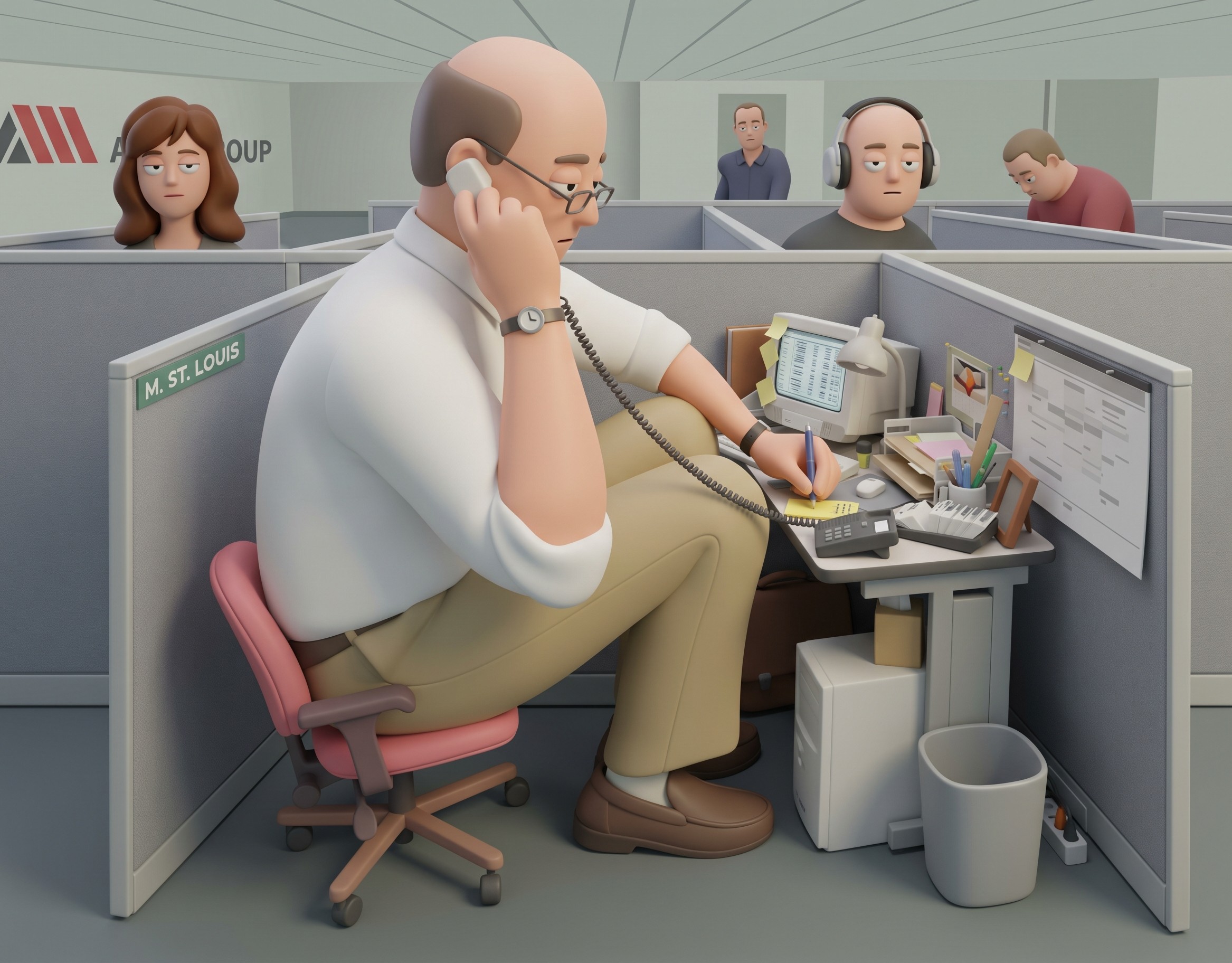
The call comes in three hours after someone clicked your Meta ad. You were on a job. It went to voicemail. They did not leave a message. You never called back. The ad worked. The system behind it did not. This is the most common and most expensive pattern in service business marketing — and every pound added to the ad budget makes it worse.
Stop Running Meta Ads Until You've Fixed These Three Things
The call comes in at 2:47pm. Someone clicked your Meta ad, visited your website, and called the number in the header.
You were on a job. The call went to voicemail. They hung up without leaving a message — 80% of callers do. You never called back because you never knew the call came in. The lead is gone.
The ad worked. The targeting was precise. The creative was compelling enough to generate a click and a call. Everything the Meta campaign was supposed to do, it did. The system behind it — the infrastructure that was supposed to capture and convert the lead the ad generated — did not exist.
This is the most common and most expensive pattern in service business marketing. It does not show up in the Meta Ads dashboard. The campaign metrics look fine: good cost per click, reasonable CPM, clicks being generated. The failure is invisible because it happens after the ad's job is done.
Every pound added to the ad budget makes this worse. More spend generates more calls that go to voicemail. More clicks that land on a website with no after-hours engagement. More leads that enter no follow-up sequence. The campaign scales. The leakage scales with it.
The fix is not better creative. It is not smarter targeting. It is not a higher budget or a lower bid. It is fixing the three systems that should be catching what the ad generates — before the ad spends another pound.
Why Meta Ads Fail for Service Businesses (It Is Rarely the Ad)
Meta's 2026 AI delivery system has become significantly more sophisticated. The platform is better than it has ever been at finding the right audience, optimising for conversion intent, and distributing creative to users most likely to act.
Meta rolled out a major AI delivery update in early 2026, transitioning to outcome-based optimisation — meaning the algorithm is actively seeking people most likely to complete the conversion event you have specified. If you have configured it correctly with proper tracking infrastructure, Meta is working harder for you than it ever has.
The problem is not the delivery. It is what happens when delivery succeeds.
Lead comes in. Nobody answers. No follow-up fires. No chatbot engages the visitor who did not call. The conversion event that Meta was optimising for — a booked appointment, a phone call, a form submission — happens, goes unhandled, and generates no revenue. Meta reports a conversion. Your business saw no client.
The three systems that must exist before Meta Ads generate a positive ROI for service businesses:
A system that answers every call the ad generates — at any hour
A system that follows up with every lead within 5 minutes, automatically
A system that tracks conversions accurately enough to know what is working
Without all three, Meta Ads for service businesses is an exercise in generating expensive, unhandled enquiries.
Fix 1: Answer Every Call the Ad Generates
Meta Ads generate calls during business hours, after hours, on weekends, and on bank holidays. A service business that answers calls between 9am and 5pm Monday to Friday is answering approximately 40% of the calls its Meta campaign generates — and missing the other 60%.
The leads generated outside business hours are not lower quality. Research consistently shows after-hours callers are disproportionately high-intent: they are acting on a problem that has been on their mind all day, and they are ready to book. A clinic receiving a call about a consultation at 7pm, a law firm receiving an intake call on Saturday morning, an HVAC company receiving an emergency call at 9pm — all of these are among the most valuable leads the Meta campaign produces.
They all go to voicemail without a 24/7 answering system.
The fix: AI Voice Receptionist
Every inbound call answered in under 500 milliseconds, 24/7. Trained on your services, your pricing, your booking process. Books directly into your calendar. Detects emergencies and escalates to your mobile in real time. The call the Meta ad generated at 7pm on a Tuesday gets answered, handled, and booked before the caller considers calling the next result.
The conversion rate impact: businesses recovering previously unanswered calls through AI voice receptionists report booking rates of 40–60% on previously lost call volume. For a service business receiving 20 ad-generated calls per week with a 40% miss rate and a £500 average job value, recovering those 8 weekly missed calls at a 50% booking rate generates £2,000 additional weekly revenue — from the same ad spend, with no change to the campaign.
Fix 2: Follow Up With Every Lead Within 5 Minutes
Meta lead form submissions — the most common conversion type for service business campaigns — arrive in your GHL or CRM pipeline and wait. Someone fills in the form at 11am. Your team is in back-to-back appointments. The lead sits until 2pm. By 2pm, the prospect has already booked with a competitor.
Leads contacted within 5 minutes convert at 21 times the rate of leads contacted after 30 minutes (Harvard Business Review). After one hour, the conversion probability has dropped by 80%. After 24 hours, you are not calling a warm lead — you are calling someone who already moved on and is now mildly inconvenienced by your call.
For most service businesses, the average lead response time is 4–6 hours on a good day. On a busy day, it is the next morning. The Meta campaign is generating leads that cost £25–£55 each in professional services niches — and the majority of them are dying in a follow-up gap that an automation sequence closes completely.
The fix: Lead Management Automations
Every Meta lead form submission triggers an immediate automated response — within 2 minutes, regardless of when the form is submitted:
Personalised SMS acknowledgement: "Hi [Name], thanks for reaching out about [service]. We've received your enquiry and will be in touch shortly. In the meantime, here's how to book directly: [link]"
Simultaneous email confirmation with service information relevant to their enquiry type
Hot lead alert to your team's phone via Slack or WhatsApp
If no response within 24 hours, follow-up touch 1 of a structured 5-touch sequence over 14 days
The sequence converts the leads that a single-touch approach loses. Follow-up messages generate 42% of all responses in structured sequences — the majority of conversions that a business with no follow-up system simply never sees.
Fix 3: Track What Is Actually Converting
Meta's January 2026 attribution window changes mean that businesses without server-side tracking infrastructure are now operating with significantly less conversion visibility than before. Pixel-only tracking — which most service businesses are still using — misses a substantial portion of iOS conversions and provides inaccurate cost-per-lead data.
The consequence: you are making budget allocation decisions based on incomplete data. Campaigns that appear expensive may be significantly more efficient than reported. Campaigns that appear to be performing well may be generating leads that cost three times what you think.
Without accurate conversion data, you cannot answer the three questions that govern Meta Ads profitability:
What is my actual cost per qualified lead?
Which ad sets and creatives are generating leads that book?
What is my true cost per booked appointment from this campaign?
Guessing at these numbers means guessing at budget allocation. Guessing at budget allocation means systematically wasting spend on underperforming ad sets while underinvesting in the ones that work.
The fix: GHL Conversion API (CAPI) + Verified Attribution
GoHighLevel's Conversion API sends server-side conversion events directly to Meta — bypassing iOS limitations, recovering the conversions that pixel tracking misses, and providing accurate attribution at the campaign, ad set, and ad level.
The result: cost-per-lead data you can make decisions from. Budget allocation based on verified performance rather than incomplete pixel data. The ability to identify which creative and which audience produces leads that actually book — and scale accordingly.
Meta's March 2026 attribution rebuild was primarily a reporting change rather than a signal loss — meaning the underlying conversions are still happening, but businesses without CAPI are not seeing them reported accurately. Proper CAPI implementation restores visibility that most service businesses have lost.
The Correct Sequence: Infrastructure First, Ads Second
The instinct when Meta Ads are underperforming is to change the ad. New creative. Different audience. Higher budget. Lower bid. Another agency.
In most cases, none of these changes address the actual problem. The infrastructure that was supposed to convert what the ad generates does not exist or does not function.
The correct sequence is:
Step 1 — Install the AI Voice Receptionist. Every call the campaign generates gets answered. Bookings happen in the moment of peak intent. Emergency escalations reach your team in real time.
Step 2 — Build the lead follow-up automations. Every form submission gets an immediate response. Every lead enters a structured nurture sequence. Nothing goes cold because nobody had time to call back.
Step 3 — Implement CAPI tracking. Accurate conversion data flows from your CRM to Meta. Budget allocation is based on verified performance. The campaign optimises on real signals.
Step 4 — Launch or resume Meta Ads on top of working infrastructure. Now the ad budget is being amplified by a system that converts what it generates — rather than eroded by a system that lets it leak away.
My Revue builds all three infrastructure components as part of the Growth and Scale packages — AI Voice Receptionist, Lead Management Automations, and GHL CAPI tracking — fully live within 14 days. Meta Ads management is added as the final layer, with performance fees of 15% per qualified lead rather than a flat retainer.
The Revenue Maths: Infrastructure vs Ad Spend
For a service business currently spending £800/month on Meta Ads with a broken conversion system:
Current state:
Leads generated per month: 22 at £36 CPL
Leads that actually book (30% conversion, limited by response time and missed calls): 6–7
Monthly revenue from Meta Ads: 7 × £450 average job = £3,150
ROAS: 3.9x
With infrastructure fixed (same ad spend):
Leads generated per month: 22 (unchanged)
Leads that actually book (conversion rate rises to 55–60% with immediate follow-up and 24/7 call answering): 12–13
Monthly revenue from Meta Ads: 13 × £450 = £5,850
ROAS: 7.3x
Same budget. Same campaign. Same creative. Infrastructure change only. Revenue from Meta Ads nearly doubles.
Frequently Asked Questions
How do I know if my conversion system is broken before spending more?
Check three things: (1) Your average response time to Meta lead form submissions — if it is over 30 minutes, leads are dying before follow-up. (2) Your after-hours call answer rate — if calls go to voicemail between 5pm and 9am, you are missing a significant share of ad-generated enquiries. (3) Your CAPI implementation status — if you are running pixel-only tracking, your cost-per-lead data is inaccurate. Any one of these indicates the infrastructure needs fixing before budget increases make sense.
Can I fix the infrastructure while keeping the ads running?
Yes. The infrastructure build happens in parallel with existing campaigns. The AI Voice Receptionist and lead automations can be live within 7–10 days without pausing ad spend. CAPI implementation takes 1–2 days once GHL is configured. You will start seeing the impact on lead handling immediately.
What if my Meta ads are genuinely not working — bad creative, wrong audience?
Audit sequence: infrastructure problems are more common than campaign problems for service businesses. Before changing creative or audience, verify response time, call answer rate, and tracking accuracy. If all three are functioning correctly and leads still are not converting, the campaign targeting or creative may need review. My Revue's Meta Ads management includes this audit as part of onboarding.
Conclusion
Your Meta ads are probably not the problem.
The call that went to voicemail at 3pm. The lead form submission that sat in your inbox until the next morning. The cost-per-lead number based on pixel tracking that has been inaccurate since iOS 14. These are the conversion failures that Meta Ads cannot fix — because they happen after the ad has done its job.
Fix the infrastructure first. AI Voice Receptionist for every call. Lead management automations for every form submission. GHL CAPI for accurate conversion tracking. Then run Meta Ads on top of a system that converts what they generate.
My Revue builds the infrastructure and manages the ads — as a single connected system, fully live within 14 days.
[Book a free Meta Ads infrastructure audit] — we will review your current campaign, check your conversion tracking, calculate your missed lead rate, and show you exactly what fixing the infrastructure would add to your Meta Ads ROAS.
[Book My Free Audit]




The call comes in three hours after someone clicked your Meta ad. You were on a job. It went to voicemail. They did not leave a message. You never called back. The ad worked. The system behind it did not. This is the most common and most expensive pattern in service business marketing — and every pound added to the ad budget makes it worse.
Stop Running Meta Ads Until You've Fixed These Three Things
The call comes in at 2:47pm. Someone clicked your Meta ad, visited your website, and called the number in the header.
You were on a job. The call went to voicemail. They hung up without leaving a message — 80% of callers do. You never called back because you never knew the call came in. The lead is gone.
The ad worked. The targeting was precise. The creative was compelling enough to generate a click and a call. Everything the Meta campaign was supposed to do, it did. The system behind it — the infrastructure that was supposed to capture and convert the lead the ad generated — did not exist.
This is the most common and most expensive pattern in service business marketing. It does not show up in the Meta Ads dashboard. The campaign metrics look fine: good cost per click, reasonable CPM, clicks being generated. The failure is invisible because it happens after the ad's job is done.
Every pound added to the ad budget makes this worse. More spend generates more calls that go to voicemail. More clicks that land on a website with no after-hours engagement. More leads that enter no follow-up sequence. The campaign scales. The leakage scales with it.
The fix is not better creative. It is not smarter targeting. It is not a higher budget or a lower bid. It is fixing the three systems that should be catching what the ad generates — before the ad spends another pound.
Why Meta Ads Fail for Service Businesses (It Is Rarely the Ad)
Meta's 2026 AI delivery system has become significantly more sophisticated. The platform is better than it has ever been at finding the right audience, optimising for conversion intent, and distributing creative to users most likely to act.
Meta rolled out a major AI delivery update in early 2026, transitioning to outcome-based optimisation — meaning the algorithm is actively seeking people most likely to complete the conversion event you have specified. If you have configured it correctly with proper tracking infrastructure, Meta is working harder for you than it ever has.
The problem is not the delivery. It is what happens when delivery succeeds.
Lead comes in. Nobody answers. No follow-up fires. No chatbot engages the visitor who did not call. The conversion event that Meta was optimising for — a booked appointment, a phone call, a form submission — happens, goes unhandled, and generates no revenue. Meta reports a conversion. Your business saw no client.
The three systems that must exist before Meta Ads generate a positive ROI for service businesses:
A system that answers every call the ad generates — at any hour
A system that follows up with every lead within 5 minutes, automatically
A system that tracks conversions accurately enough to know what is working
Without all three, Meta Ads for service businesses is an exercise in generating expensive, unhandled enquiries.
Fix 1: Answer Every Call the Ad Generates
Meta Ads generate calls during business hours, after hours, on weekends, and on bank holidays. A service business that answers calls between 9am and 5pm Monday to Friday is answering approximately 40% of the calls its Meta campaign generates — and missing the other 60%.
The leads generated outside business hours are not lower quality. Research consistently shows after-hours callers are disproportionately high-intent: they are acting on a problem that has been on their mind all day, and they are ready to book. A clinic receiving a call about a consultation at 7pm, a law firm receiving an intake call on Saturday morning, an HVAC company receiving an emergency call at 9pm — all of these are among the most valuable leads the Meta campaign produces.
They all go to voicemail without a 24/7 answering system.
The fix: AI Voice Receptionist
Every inbound call answered in under 500 milliseconds, 24/7. Trained on your services, your pricing, your booking process. Books directly into your calendar. Detects emergencies and escalates to your mobile in real time. The call the Meta ad generated at 7pm on a Tuesday gets answered, handled, and booked before the caller considers calling the next result.
The conversion rate impact: businesses recovering previously unanswered calls through AI voice receptionists report booking rates of 40–60% on previously lost call volume. For a service business receiving 20 ad-generated calls per week with a 40% miss rate and a £500 average job value, recovering those 8 weekly missed calls at a 50% booking rate generates £2,000 additional weekly revenue — from the same ad spend, with no change to the campaign.
Fix 2: Follow Up With Every Lead Within 5 Minutes
Meta lead form submissions — the most common conversion type for service business campaigns — arrive in your GHL or CRM pipeline and wait. Someone fills in the form at 11am. Your team is in back-to-back appointments. The lead sits until 2pm. By 2pm, the prospect has already booked with a competitor.
Leads contacted within 5 minutes convert at 21 times the rate of leads contacted after 30 minutes (Harvard Business Review). After one hour, the conversion probability has dropped by 80%. After 24 hours, you are not calling a warm lead — you are calling someone who already moved on and is now mildly inconvenienced by your call.
For most service businesses, the average lead response time is 4–6 hours on a good day. On a busy day, it is the next morning. The Meta campaign is generating leads that cost £25–£55 each in professional services niches — and the majority of them are dying in a follow-up gap that an automation sequence closes completely.
The fix: Lead Management Automations
Every Meta lead form submission triggers an immediate automated response — within 2 minutes, regardless of when the form is submitted:
Personalised SMS acknowledgement: "Hi [Name], thanks for reaching out about [service]. We've received your enquiry and will be in touch shortly. In the meantime, here's how to book directly: [link]"
Simultaneous email confirmation with service information relevant to their enquiry type
Hot lead alert to your team's phone via Slack or WhatsApp
If no response within 24 hours, follow-up touch 1 of a structured 5-touch sequence over 14 days
The sequence converts the leads that a single-touch approach loses. Follow-up messages generate 42% of all responses in structured sequences — the majority of conversions that a business with no follow-up system simply never sees.
Fix 3: Track What Is Actually Converting
Meta's January 2026 attribution window changes mean that businesses without server-side tracking infrastructure are now operating with significantly less conversion visibility than before. Pixel-only tracking — which most service businesses are still using — misses a substantial portion of iOS conversions and provides inaccurate cost-per-lead data.
The consequence: you are making budget allocation decisions based on incomplete data. Campaigns that appear expensive may be significantly more efficient than reported. Campaigns that appear to be performing well may be generating leads that cost three times what you think.
Without accurate conversion data, you cannot answer the three questions that govern Meta Ads profitability:
What is my actual cost per qualified lead?
Which ad sets and creatives are generating leads that book?
What is my true cost per booked appointment from this campaign?
Guessing at these numbers means guessing at budget allocation. Guessing at budget allocation means systematically wasting spend on underperforming ad sets while underinvesting in the ones that work.
The fix: GHL Conversion API (CAPI) + Verified Attribution
GoHighLevel's Conversion API sends server-side conversion events directly to Meta — bypassing iOS limitations, recovering the conversions that pixel tracking misses, and providing accurate attribution at the campaign, ad set, and ad level.
The result: cost-per-lead data you can make decisions from. Budget allocation based on verified performance rather than incomplete pixel data. The ability to identify which creative and which audience produces leads that actually book — and scale accordingly.
Meta's March 2026 attribution rebuild was primarily a reporting change rather than a signal loss — meaning the underlying conversions are still happening, but businesses without CAPI are not seeing them reported accurately. Proper CAPI implementation restores visibility that most service businesses have lost.
The Correct Sequence: Infrastructure First, Ads Second
The instinct when Meta Ads are underperforming is to change the ad. New creative. Different audience. Higher budget. Lower bid. Another agency.
In most cases, none of these changes address the actual problem. The infrastructure that was supposed to convert what the ad generates does not exist or does not function.
The correct sequence is:
Step 1 — Install the AI Voice Receptionist. Every call the campaign generates gets answered. Bookings happen in the moment of peak intent. Emergency escalations reach your team in real time.
Step 2 — Build the lead follow-up automations. Every form submission gets an immediate response. Every lead enters a structured nurture sequence. Nothing goes cold because nobody had time to call back.
Step 3 — Implement CAPI tracking. Accurate conversion data flows from your CRM to Meta. Budget allocation is based on verified performance. The campaign optimises on real signals.
Step 4 — Launch or resume Meta Ads on top of working infrastructure. Now the ad budget is being amplified by a system that converts what it generates — rather than eroded by a system that lets it leak away.
My Revue builds all three infrastructure components as part of the Growth and Scale packages — AI Voice Receptionist, Lead Management Automations, and GHL CAPI tracking — fully live within 14 days. Meta Ads management is added as the final layer, with performance fees of 15% per qualified lead rather than a flat retainer.
The Revenue Maths: Infrastructure vs Ad Spend
For a service business currently spending £800/month on Meta Ads with a broken conversion system:
Current state:
Leads generated per month: 22 at £36 CPL
Leads that actually book (30% conversion, limited by response time and missed calls): 6–7
Monthly revenue from Meta Ads: 7 × £450 average job = £3,150
ROAS: 3.9x
With infrastructure fixed (same ad spend):
Leads generated per month: 22 (unchanged)
Leads that actually book (conversion rate rises to 55–60% with immediate follow-up and 24/7 call answering): 12–13
Monthly revenue from Meta Ads: 13 × £450 = £5,850
ROAS: 7.3x
Same budget. Same campaign. Same creative. Infrastructure change only. Revenue from Meta Ads nearly doubles.
Frequently Asked Questions
How do I know if my conversion system is broken before spending more?
Check three things: (1) Your average response time to Meta lead form submissions — if it is over 30 minutes, leads are dying before follow-up. (2) Your after-hours call answer rate — if calls go to voicemail between 5pm and 9am, you are missing a significant share of ad-generated enquiries. (3) Your CAPI implementation status — if you are running pixel-only tracking, your cost-per-lead data is inaccurate. Any one of these indicates the infrastructure needs fixing before budget increases make sense.
Can I fix the infrastructure while keeping the ads running?
Yes. The infrastructure build happens in parallel with existing campaigns. The AI Voice Receptionist and lead automations can be live within 7–10 days without pausing ad spend. CAPI implementation takes 1–2 days once GHL is configured. You will start seeing the impact on lead handling immediately.
What if my Meta ads are genuinely not working — bad creative, wrong audience?
Audit sequence: infrastructure problems are more common than campaign problems for service businesses. Before changing creative or audience, verify response time, call answer rate, and tracking accuracy. If all three are functioning correctly and leads still are not converting, the campaign targeting or creative may need review. My Revue's Meta Ads management includes this audit as part of onboarding.
Conclusion
Your Meta ads are probably not the problem.
The call that went to voicemail at 3pm. The lead form submission that sat in your inbox until the next morning. The cost-per-lead number based on pixel tracking that has been inaccurate since iOS 14. These are the conversion failures that Meta Ads cannot fix — because they happen after the ad has done its job.
Fix the infrastructure first. AI Voice Receptionist for every call. Lead management automations for every form submission. GHL CAPI for accurate conversion tracking. Then run Meta Ads on top of a system that converts what they generate.
My Revue builds the infrastructure and manages the ads — as a single connected system, fully live within 14 days.
[Book a free Meta Ads infrastructure audit] — we will review your current campaign, check your conversion tracking, calculate your missed lead rate, and show you exactly what fixing the infrastructure would add to your Meta Ads ROAS.
[Book My Free Audit]